

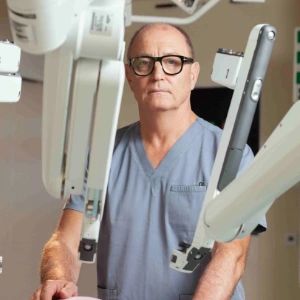
Speaker
Alexander Popov
- Moscow Regional Research Institute of Obstetrics and Gynecology named after Academician V.I. Krasnopolsky
- Russian Federation
Presentation
Application of an anti-adhesive barrier in colorectal resection
- APRIL 22-23, 2027
- Paris, France
Biography
Aleksander Popov is Head of the Gynecology and Oncology Surgery Department in the Moscow Regional Scientific Research Institute of Obstetrics and Gynecology. In more than 30 years of practice, he has published over 360 scientific papers and 4 monographs. He holds 8 invention patents registered in Russia. He trained in leading clinics such as the Mayo Clinic, New York University, the University of Kiel, and the Clermont-Ferrand Clinic. He has been teaching at the training center IRCAD (France) since 2017. He is a member of many professional associations: the Russian Association of Human Reproduction (RAHR), the Russian Association of Endoscopic Gynecologists (RAEG), the Russian Association of Endometriosis (RAE), the American Association of Gynecological Laparoscopy (AAGL), the European Association of Endoscopic Gynecology (ESGE), the European Endometriosis League (EEL), the World Endometriosis Society (WES), the Society of European Robotic Gynecological Surgery (SERGS), the Society of Endometriosis and Uterine Disorders (SEUD), and the Asian Society of Endometriosis (ACE).
Abstract
Introduction: Colorectal resection using conventional laparoscopic surgery (CLS) for endometriosis has been known since 1992. The Natural Orifice Specimen Extraction (NOSE) technique demonstrates promising results in minimizing surgical trauma. However, issues of bacterial risk and prevention of postoperative adhesions remain relevant. Use of anti-adhesive barriers may potentially reduce adhesion formation risk.
Methods: The aim of study was to analyze the safety of anti-adhesive barrier applying during colorectal resection using NOSE and CLS techniques. During first stage of the study, an analysis of bacterial contamination data was assessed in 27 patients, including 17 women, which underwent NOSE technique and 10 women using CLS technique. The study examined two samples of microbiological cultures taken before and after opening of intestinal lumen, as well as after the circular stapling stage in NOSE and CLS subgroups. No significant difference in bacterial contamination was found. Thus, it can be concluded that both methods of colorectal resection carry similar bacterial risks.
The second stage of the study assessed anti-adhesive barriers safety. There were 91 patients with deep infiltrating endometriosis, which underwent colorectal resection using NOSE surgery and were divided into 3 groups:
• Group A (n = 33): NOSE + sodium hyaluronate + sodium carboxymethylcellulose.
• Group B (n = 31): NOSE + sodium carboxymethylcellulose.
• Group C (n = 27): NOSE without an anti-adhesive barrier.
The following parameters were evaluated: body temperature, leukocyte count and C-reactive protein (CRP) levels and postoperative complications.
Results: At the 2nd postoperative day, mean body temperature in groups A and C was 36.8°C, and in group B it was 36.9°C. At the 4th day, the mean body temperature in all groups was 36.7°C. Mean leukocyte count on the 2nd day was 10.5 x 10⁹/L, 11.4 x 10⁹/L, and 12.6 x 10⁹/L in group A, C and B, respectively. Mean leukocyte count was within the normal range for all groups at the 14th day. The mean CRP level on the 1st postoperative day was 34.9 mg/L in group A and 35.9 mg/L in group C, respectively. In group B it was 60.8 mg/L. On the 2nd day, the mean CRP was 50.9 mg/L in group A and 60.1 mg/L in group C. Group B had the highest mean CRP level on the 2nd day at 90 mg/L. On the 14th day, CRP levels were within the normal range in groups A and C, while group B showed an elevation of the mean CRP level at 10 mg/L. There were no complications in groups A and B. In group C there was 1 case (1.56%) of dynamic intestinal obstruction, which was resolved conservatively. Thus, the most pronounced inflammatory response was noted in the group B (50 ml of sodium carboxymethylcellulose), which may be associated with the excessive volume of the agent.
Conclusions:
1. Bacterial contamination does not differ when performing colorectal resection using NOSE technique compared to conventional approach.
2. No increase in complications rate was confirmed with the use of sodium hyaluronate + sodium carboxymethylcellulose anti-adhesive barrier after colorectal resection, including NOSE technique cases.
