
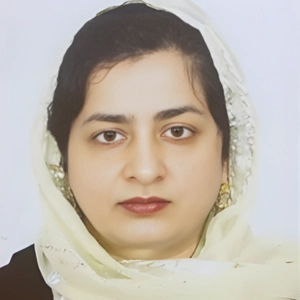
Shamaila Ibrahim
Homerton Healthcare Foundation and Kings College Hospital, UKPresentation Title:
A comparison of clinical outcomes between laparoscopic and open abdominal myomectomy in women with multiple symptomatic uterine fibroids: A systematic review and meta-analysis
Abstract
Background: Uterine fibroids (UFs) are the most common benign uterine tumours, affecting millions of women worldwide. Laparoscopic myomectomy (LM) and open myomectomy (OM) are the two main surgical modalities, particularly for women wishing to preserve the uterus. This systematic review and meta-analysis compared intraoperative, postoperative, and obstetric outcomes of LM and OM.
Methods: Following PRISMA guidelines, a comprehensive search was performed using PubMed, Embase, Web of Science, Scopus, Cochrane, Ovid, and Google Scholar. Data analysis was conducted in Excel, and meta-analysis in Review Manager 5.4.1. Results were presented as mean, standard deviation (SD), standardized mean difference (SMD), confidence interval (CI), and risk ratio (RR). Heterogeneity (I²) >50% was considered significant. Risk of bias was assessed using ROBINS-I and RoB 2, and GRADEpro generated summary tables.
Results: Fourteen studies were analysed: 12 non-randomized and 2 randomized trials, from 12 countries (2000–2024), involving 3,828 women (1,879 LM, 1,949 OM). Participant age ranged 18–50 years (mean: LM, 39.8; OM, 35.6). LM resulted in less blood loss (SMD 1.21), shorter hospital stay (SMD 1.76), and smaller haemoglobin drop (SMD 1.44), but longer surgery duration (MD = 12.3 minutes). Fewer and smaller myomas were removed in LM (P < 0.0001), though heterogeneity was high. Obstetric outcomes favoured LM: higher pregnancy rate (29.3% vs. 22.4%, P = 0.01), higher normal vaginal delivery (37.9% vs. 32.1%, P = 0.27), and lower caesarean section rate (47.4% vs. 57.8%, P = 0.17). Miscarriage rates were similar (13.5% vs. 14.1%).
Conclusion: LM offers significant advantages in reducing intraoperative and postoperative morbidity compared to the traditional open approach. The choice of procedure depends on surgical expertise and patient-specific factors: number, site, and size of fibroids. The laparoscopic approach for multiple myomas remains controversial, while open myomectomy appears more suitable for multiple and large fibroids.
Biography
Shamaila Ibrahim has over 20 years of clinical experience in obstetrics and gynaecology, beginning her career in Ghana where she served as a missionary doctor dedicated to the service of humanity. Her professional journey combines extensive clinical practice with academic achievement. She holds two MSc research degrees from UK universities, has completed MRCOG Part 2, and is a full member of the Royal College of Physicians of Ireland (MRCPI). She is GMC registered and currently works as a Bank Trust SHO in Obstetrics & Gynaecology across two major London NHS trusts: Homerton Healthcare Foundation and King’s College Hospital. She has a particular interest in uterine fibroid research, focusing on surgical outcomes and their impact on fertility and long term reproductive health. This interest motivated her to undertake a systematic review and meta analysis comparing laparoscopic and open myomectomy during her MSc in Laparoscopic Surgery and Surgical Skills at Barts Cancer Institute, Queen Mary University of London (2023–2024), which she completed with distinction. Her research was conducted under the supervision of Professor Bijendra Patel, overall director of the MSc programme and project supervisor. His mentorship offered strategic academic direction and ensured adherence to rigorous standards.

Organization Location
1309 Coffeen Avenue, STE 1200, Sheridan, Wyoming 82801, USA
Mail us at
Program Enquiry
gynaecology@scientexconferences.com
General Enquiry
contact@scientexconferences.com
Registration query
finance@scientexconferences.com
gynaecology@scientexevents.org
Our Social Presence
Call us at
USA : (+1) 510 370 1954