
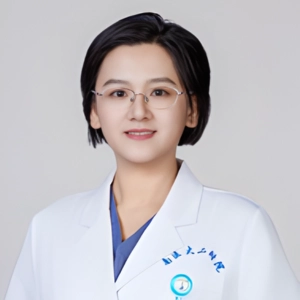
Qian Huang
The Second Affiliated Hospital of Nanjing Medical University, ChinaPresentation Title:
Transumbilical single-port myomectomy: A prospective comparison of Robotic Single-Site (RSSM) and laparoscopic approaches
Abstract
Objective: Robot-Assisted Single-Site Myomectomy (RSSM) and single-port Laparoscopic Myomectomy (LM) are minimally invasive techniques for uterine fibroid removal. Comparative evidence on perioperative outcomes, especially regarding operative blood loss and surgical efficiency, remains limited.
Methods: We conducted a prospective observational study of 68 patients undergoing transumbilical myomectomy between October 2024 and June 2025. Thirty-five patients underwent RSSM using the da Vinci Xi system and 33 underwent single-port LM. Demographic characteristics, operative parameters, and perioperative outcomes were collected. Multivariable linear regression was used to identify independent predictors of Estimated Blood Loss (EBL).
Results: Baseline demographics were comparable between groups, though prior pelvic surgery and fertility-preservation intent were more frequent in the RSSM cohort. RSSM was associated with longer operative time (136.91 ± 47.77vs 105.14 ± 36.04 min, p<0.05) and higher mean EBL (175.15 ± 143.72 vs 118.00 ± 145.37 mL, p<0.05). Regression analysis identified lower-segment fibroid location (β = 154.242, p<0.01) and longer operative duration (β =1.132, p<0.05) as independent predictors of increased EBL, regardless of surgical approach. No transfusions, visceral injuries, or conversions were recorded.
Conclusion: Both RSSM and single-port LM are safe and feasible for transumbilical myomectomy. However, RSSM is associated with greater operative time and blood loss, particularly in lower-segment fibroids. These findings highlight the importance of patient selection and surgical planning in robot-assisted single-site myomectomy.
Biography
Qian Huang is a deputy chief physician with a master's degree. She sub-specializes in fertility-preserving surgeries and the comprehensive management of endometrial cancer. She is highly skilled in various advanced techniques, including gynecological natural orifice endoscopic surgery, robotic surgery, and hysteroscopic uterine reconstruction. Her outstanding work was recognized with the Outstanding Video Award at the 25th Asia-Pacific Congress of Gynecological Endoscopy and Minimally Invasive Therapy. She has also authored several publications in SCI-indexed journals, with the highest Impact Factor of 3.9.

Organization Location
1309 Coffeen Avenue, STE 1200, Sheridan, Wyoming 82801, USA
Mail us at
Program Enquiry
gynaecology@scientexconferences.com
General Enquiry
contact@scientexconferences.com
Registration query
finance@scientexconferences.com
gynaecology@scientexevents.org
Our Social Presence
Call us at
USA : (+1) 510 370 1954