

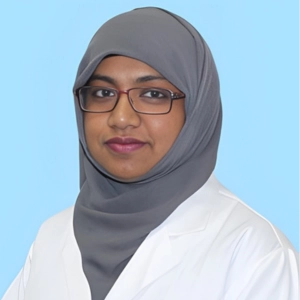
Nasrin Hossain
National Institute of Cancer and Research Hospital (NICRH), BangladeshPresentation Title:
Survival and reproductive outcome of malignant ovarian germ cell tumor after treatment: An experience in a tertiary referral hospital
Abstract
Background: Malignant ovarian germ cell tumors (MOGCTs) account for approximately 2–5% of malignant ovarian tumors. The objectives of this study were to evaluate the survival and reproductive outcomes of MOGCTs after treatment at any stage.
Methods: The current retrospective study showed a total of 110 patients with MOGCTs who were treated at the National Institute of Cancer and Research Hospital (NICRH), Dhaka, Bangladesh, from 2014 to 2022. A total of 33 patients had lost follow-up and 77 patients had completed the routine follow-up, enrolled in this study.
Results: The median age of these patients was 23 years (range: 9–66 years). The median follow-up time was 5.55 years (range 1.5–10 years). Disease-free survival (DFS) and overall survival (OS) were at 5 years, 93.5% and 90.3%, respectively and at 10 years, 90.3% and 96.7% respectively. DFS was higher (5.76±2.25) in the operable stage than in the inoperable stage (4.91±2.52), found statistically significant (p=0.001). DFS were complete surgical staging, incomplete surgical staging, and fertility sparing surgery (4.45±2.29, 5.08±2.90, and 5.31±3.37 years, respectively). According to FIGO stages I, II, III and IV were 5.61±61, 4.00±00, 3.64±2.16 and 0.50±00 years, respectively. According to histopathological type: yolk sac tumor, dysgerminoma, immature teratoma, and mixed germ cell tumor were 5.21±2.92. 5.35±3.50, 4.78±2.91 and 3.60±2.48 years, respectively. The univariate analysis showed DFS were higher in operable stage (5.75±2.25), fertility sparing surgery (5.31±3.37), FIGO stage I (5.61±3.37), dysgerminoma (5.21±2.92), and grade I (4.38±2.58), but operable stage was statistically significant (p=0.001). The multivariate analysis showed FIGO stage were found to be independently significant predictors for DFS, HR 3.25 (p =.010). A total of 9.7% had persistent disease, and 9.7% had recurrence. Their mortality rate was 8.9% due to their disease. Reproductive outcome: the menstrual cycle resumes at 42.3%, and the regular cycle was at 57.7%. Only 35.5% of patients were trying to conceived. Among them, 28.9% were conceived. Outcome of pregnancy: 0% abortions, 9.6% preterm birth, 19.3% term pregnancy. All children's development was normal (up to 2 years) except for one reported congenital anomaly.
Conclusion: MOGCTs can achieve a good prognosis after surgery and chemotherapy. This study suggests that FSS is a safe treatment option for MOGCTs, regardless of tumor stage and histopathological type.
Biography
Will be updated soon

Organization Location
1309 Coffeen Avenue, STE 1200, Sheridan, Wyoming 82801, USA
Mail us at
Program Enquiry
gynaecology@scientexconferences.com
General Enquiry
contact@scientexconferences.com
Registration query
finance@scientexconferences.com
gynaecology@scientexevents.org
Our Social Presence
Call us at
USA : (+1) 510 370 1954