
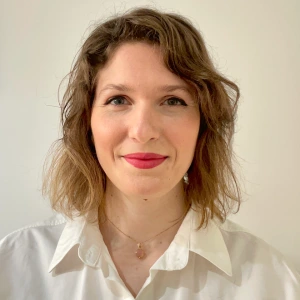
Georgiana-Sanziana Aioanei
University of Medicine and Pharmacy Carol Davila Bucharest, RomaniaPresentation Title:
Spontaneous septostomy of the dividing amniotic membrane in diamniotic pregnancies - Literature review and case report
Abstract
Introduction: Monochorionic diamniotic twin pregnancies represent a rare event associated with an extremely rare complication of the spontaneous rupture of the dividing membrane between the amniotic sacs. Once this rupture appears, the pregnancy becomes functionally a monoamniotic pregnancy, with a high risk of developing umbilical cord entanglement (up to 50%) and a supplementary rise in the perinatal mortality (up to 70%).
Method: This literature review includes 10 highly selected cases of spontaneous septostomy, respectively patients with diamniotic pregnancy who didn’t have any invasive procedures, included between 2012-2024.
Results: In 80% of the identified cases, the diagnosis was established antenatally, during the ultrasound examination from the second trimester, between 24-28 weeks of gestation. One of the most important and severe complications is represented by the umbilical cord entanglement (60%). The age of gestation at the moment of delivery varied between 24-37 weeks, with the majority being over 32 weeks. The chosen method of delivery, in the majority of cases was by cesarean section. There are established risk factors for the eventuality of a septostomy, also the ultrasound elements that can facilitate the diagnostic, maintaining the necessity of an anatomopathological confirmation.
Conclusion: During the monochorionic diamniotic pregnancy, the spontaneous rupture of the dividing membrane is an extremely rare event with a high difficulty of diagnosis antenatally. Once the diagnostic was established, the pregnancy should benefit from a management similar to a monochorionic pregnancy.
Biography
Georgiana-Sanziana Aioanei is a fellow physician in obstetrics - gynaecology affiliated to the “Carol Davila” University of Medicine and Pharmacy, Bucharest, Romania with principal interest and practice maternal foetal medicine and infertility. She has achieved clinical and research experience with fellowships in France, Centre Hospitalier de Saint-Denis şi Centre Hospitalier Intercommunal de Créteil. Her professional activities include participation in various specialised workshops, courses, both international and national congresses and author in national papers.

Organization Location
1309 Coffeen Avenue, STE 1200, Sheridan, Wyoming 82801, USA
Mail us at
Program Enquiry
gynaecology@scientexconferences.com
General Enquiry
contact@scientexconferences.com
Registration query
finance@scientexconferences.com
gynaecology@scientexevents.org
Our Social Presence
Call us at
USA : (+1) 510 370 1954