

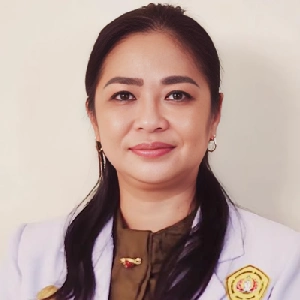
Fitri Sepviyanti Sumardi
UPN Veteran Jawa Timur, IndonesiaPresentation Title:
Norepinephrine for spinal anesthesia–induced hypotension in cesarean section: A systematic review
Abstract
Introduction: Hypotension is a common complication following spinal anesthesia in cesarean sections. Vasopressors, particularly norepinephrine, are used to manage this hypotension. This systematic review assesses the effectiveness of vasopressors in managing hypotension induced by spinal anesthesia.
Methods: A literature search was conducted in PubMed, Scopus, and Google Scholar. Relevant studies were assessed for quality using the Cochrane Risk of Bias Tool and the Newcastle-Ottawa Scale. Data were extracted and analyzed.
Results: This review includes 20 studies. Norepinephrine is effective in increasing blood pressure. Continuous infusion provides better hemodynamic stability and fewer side effects compared to bolus administration. There was no significant difference in neonatal APGAR
scores between the two methods.
Conclusion: Norepinephrine, mainly when administered via continuous infusion, is effective in managing hypotension following spinal anesthesia in cesarean sections, with a favorable safety profile for both mother and baby.
Biography
Fitri Sepviyanti Sumardi is an anesthesiologist based in Indonesia, affiliated with a tertiary referral hospital and actively involved in clinical practice, medical education, and research. Her academic interests include neuroanesthesia, neurocritical care, disaster medicine, and anesthesia management in resource-limited settings. She has authored and contributed to scientific articles, systematic reviews and educational materials for undergraduate and postgraduate medical training. She also serves as a peer reviewer for medical journals, with a focus on anesthesiology, critical care and disaster-related research. Her work emphasizes patient safety, ethical medical practice, and evidence-based innovation in high-risk clinical environments.

Organization Location
1309 Coffeen Avenue, STE 1200, Sheridan, Wyoming 82801, USA
Mail us at
Program Enquiry
gynaecology@scientexconferences.com
General Enquiry
contact@scientexconferences.com
Registration query
finance@scientexconferences.com
gynaecology@scientexevents.org
Our Social Presence
Call us at
USA : (+1) 510 370 1954